Explainer
How to read an FEC filing
Every federal candidate and PAC reports its money to the Federal Election Commission. This guide covers where to find the reports and what the forms mean.
Where to find filings
Federal campaign finance reports are free and public at FEC.gov. You can search by candidate or committee name, then open individual reports or browse receipts and disbursements across reports.
The main forms
Candidate committees file Form 3. PACs and party committees, including super PACs, file Form 3X. Each report starts with a summary page of totals, followed by schedules with the details.
The schedules that matter
Schedule A lists itemized receipts: who gave, how much, when, and the donor's employer and occupation. Committees must itemize donors whose contributions add up to more than $200, counted per election cycle for candidate committees and per calendar year for PACs and parties. Schedule B lists disbursements, meaning what the committee spent and who it paid. Schedule E lists independent expenditures, the ads and mailers that super PACs buy to support or oppose candidates.
Timing
Most committees report quarterly or monthly, with extra reports before and after elections. In the final weeks before an election, candidates must also file 48-hour notices for large contributions.
Reading carefully
A donor's employer field can reveal patterns, such as many employees of one company giving on the same day. Refunds, transfers between committees, and earmarked gifts routed through conduits can make totals look larger or smaller than they are, so we check the full report before citing a figure.
In our reporting
Related receipts
Recent Swamp Watch receipts on this subject.

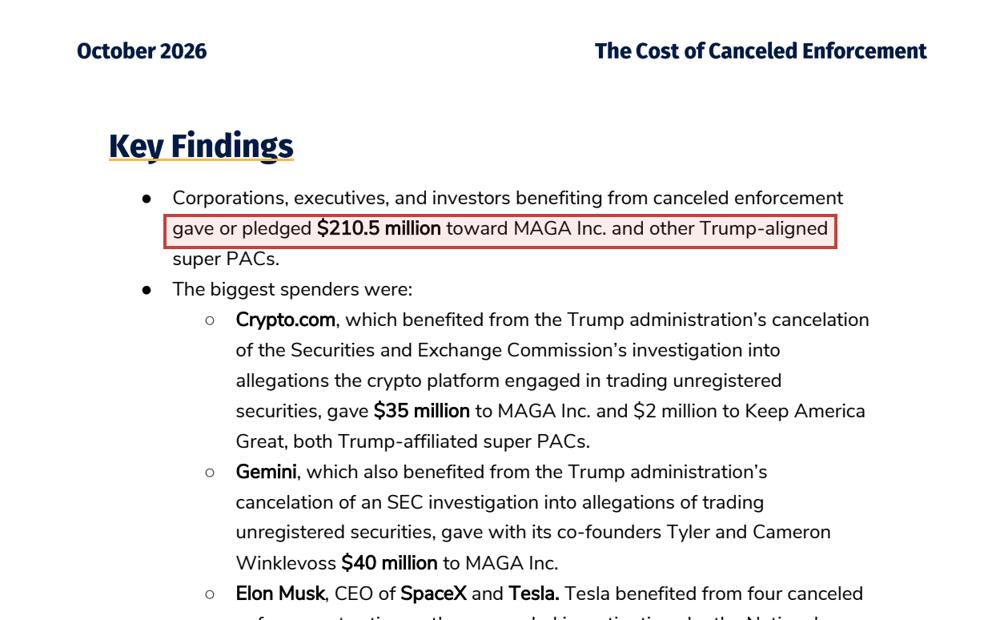
Palantir just got EXPOSED for donating millions to Trump's ballroom.
Under Trump, the company has received up to $11B in DOD contracts.
SourceSee the post on XThe sourcing for this receipt is in the post's replies.
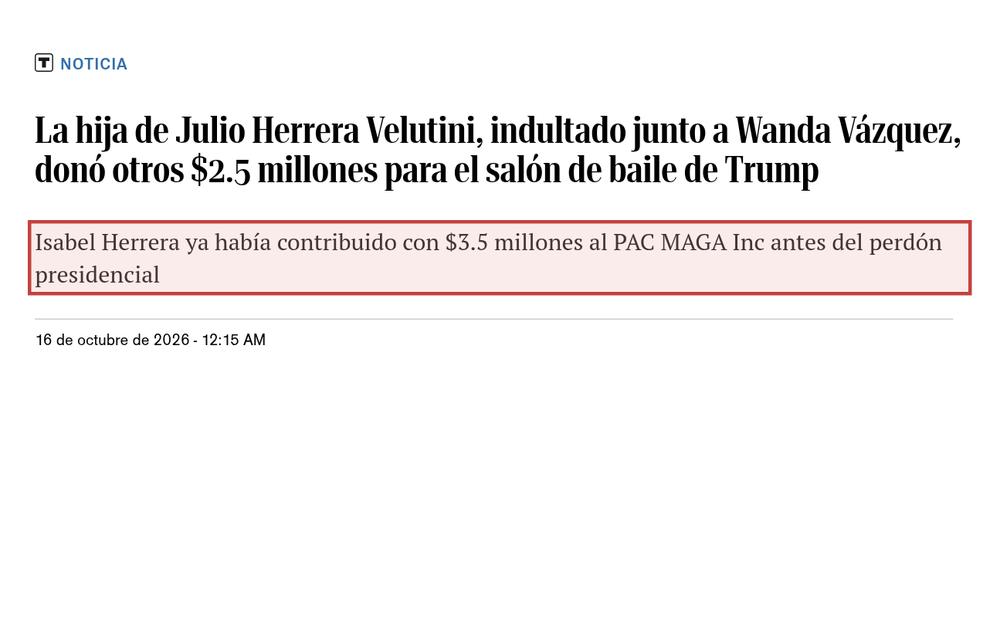
A banker's daughter gave Trump's super PAC $3.5M and pledged $2.5M to his ballroom.
Trump then pardoned her father, who had been charged in a bribery scheme.